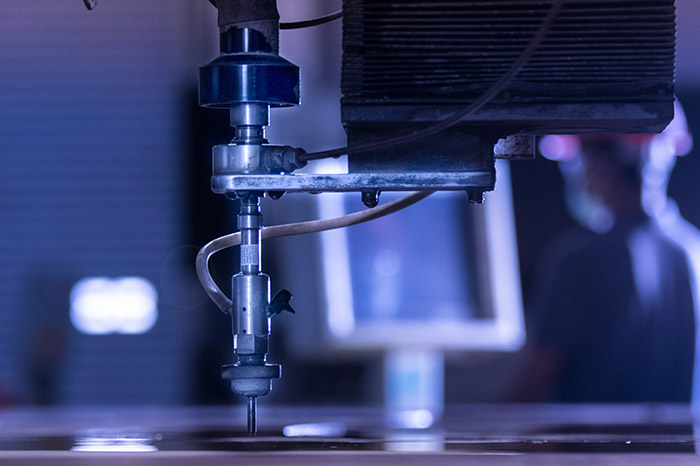
Manufacturing plants handle materials that demand clean cuts, precise dimensions, and controlled production. High pressure waterjet systems use a focused stream of water and abrasive particles to shape metals, stone, composites, and other materials without heat affected zones.
This technology assists with demanding industrial work, while water jet services help manufacturers achieve consistent results across varied production requirements and complex component designs.
Metal fabrication and engineering
Industrial metal fabrication uses waterjet cutting for steel, aluminum, copper, brass, titanium, and other alloys. The process cuts thick plates, sheets, brackets, gears, panels, and structural parts with strong dimensional control. Since the cutting stream produces minimal thermal stress, manufacturers reduce issues linked with heat distortion. Engineers also use waterjet systems for prototypes, replacement components, custom parts, and detailed profiles that demand accurate edges.
Aerospace component production
Aerospace manufacturing uses waterjet systems for parts that require precise profiles and controlled material removal. The process works with aluminum, titanium, composites, and specialized alloys used across aircraft structures and equipment. Since the cutting process introduces little heat, engineers reduce risks linked with thermal alteration. Waterjet equipment also handles intricate shapes, making it useful for brackets, panels, insulation components, and prototype aircraft parts.
Automotive manufacturing
Automotive plants use high pressure waterjet cutting for body components, interior panels, gaskets, foam materials, and specialized metal parts. Manufacturers can produce intricate contours directly from digital designs, supporting both prototype development and regular production. The process also suits materials that react poorly to heat. This flexibility helps automotive teams handle varied component sizes while maintaining consistent dimensions across repeated cutting operations.
Stone and ceramic processing
Waterjet systems serve stone, ceramic, porcelain, and engineered surfaces across industrial fabrication. Manufacturers use the technology to produce countertops, flooring elements, decorative panels, architectural inlays, and custom patterns. The cold cutting process limits thermal damage and supports detailed designs in fragile materials. Abrasive waterjet equipment also cuts dense stone with controlled edges, giving fabricators greater freedom when working with intricate shapes.
Industrial equipment manufacturing
Machinery manufacturers use waterjet cutting for machine panels, mounting plates, seals, enclosures, brackets, and custom components. Digital programming lets operators reproduce complex profiles with consistent measurements across production batches. The equipment also handles different material thicknesses without extensive tooling changes. This versatility suits plants that produce varied equipment, replacement parts, and specialized assemblies for industrial operations.